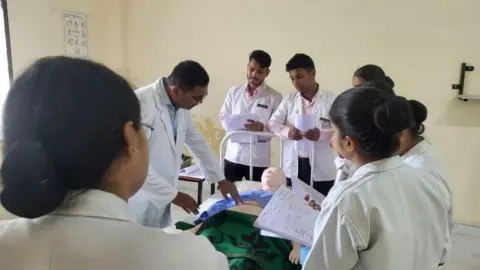
A degree in public health, nursing, biotechnology, pharmacy, or life sciences provides a strong career foundation, but additional certifications can make your resume more competitive. Employers increasingly look for professionals who understand epidemiology, healthcare data analytics, digital health systems, clinical research, project management, and public health program implementation.
In this article9 sections
- 1. Epidemiology Certification
- 2. Healthcare Data Analytics Certification
- 3. Clinical Research Certification
- 4. Healthcare Information Management Certification
- 5. Public Health Program Management Certification
- 6. Infection Prevention and Control Certification
- 7. Medical Coding and Health Insurance Certification
- How to Choose the Right Certification
- Conclusion
The right professional certification can help you qualify for roles in government health departments, hospitals, NGOs, health insurance companies, pharmaceutical organisations, research institutes, and international healthcare agencies. Here are seven certifications that can strengthen your public health resume and improve your career opportunities.
1. Epidemiology Certification
Epidemiology is one of the most valuable specialisations in public health. It focuses on disease patterns, risk factors, outbreak investigation, surveillance, and evidence-based health interventions.
An epidemiology certificate can benefit candidates seeking employment as public health researchers, surveillance officers, epidemiology assistants, or disease-control program coordinators. The CDC’s public health training resources cover essential areas such as epidemiological terminology, health data sources, study design, disease rates, and outbreak investigation.
2. Healthcare Data Analytics Certification
Modern healthcare organisations depend heavily on data to improve patient outcomes, reduce operational costs, and monitor public health programs. A healthcare data analytics course teaches candidates how to clean, interpret, visualise, and communicate health information.
Programs covering Excel, SQL, Python, R, Power BI, Tableau, statistics, and predictive modelling can strengthen applications for healthcare data analyst and public health analyst positions. Google’s Data Analytics Professional Certificate, for example, develops foundational analytical skills without requiring previous experience.
Find jobs that match you
2 quick questions · free · no sign-up
1 What is your qualification?
2 Which jobs do you want?
3. Clinical Research Certification
A clinical research certification is useful for candidates interested in pharmaceutical companies, contract research organisations, medical colleges, clinical trials, and research hospitals.
Training commonly covers Good Clinical Practice, research ethics, clinical trial documentation, informed consent, pharmacovigilance, regulatory compliance, and patient safety. This qualification can support careers as a clinical research coordinator, trial assistant, research associate, or regulatory affairs professional.
4. Healthcare Information Management Certification
Digital health records and hospital information systems are transforming healthcare delivery. A certification such as the Certified Associate in Healthcare Information and Management Systems can demonstrate foundational knowledge of healthcare technology, clinical workflows, information systems, and digital health operations.
The CAHIMS credential is designed for professionals entering or developing careers in healthcare information and management systems.
5. Public Health Program Management Certification
Public health organisations need professionals who can plan projects, manage budgets, coordinate field teams, measure performance, and prepare reports for stakeholders.
A certification in project management, monitoring and evaluation, or healthcare administration can improve your suitability for positions such as Public Health Program Coordinator, District Program Manager, NGO Project Officer, and Health Operations Executive.
| Certification Area | Suitable Career Path |
|---|---|
| Epidemiology | Disease surveillance and research |
| Data analytics | Healthcare and policy analysis |
| Clinical research | Clinical trials and pharmaceuticals |
| Digital health | Hospital information management |
| Program management | Government and NGO health projects |
| Infection control | Hospitals and community healthcare |
| Medical coding | Insurance and healthcare administration |
6. Infection Prevention and Control Certification
Infection prevention is essential in hospitals, diagnostic laboratories, community clinics, and public health facilities. This certification helps professionals understand sterilisation, hospital-acquired infections, biomedical waste management, isolation procedures, outbreak response, and workplace safety.
It is particularly valuable for nurses, laboratory technicians, hospital administrators, community health officers, and healthcare quality professionals.
7. Medical Coding and Health Insurance Certification
Medical coding and health insurance training can open opportunities with insurance companies, hospitals, third-party administrators, medical billing organisations, and healthcare outsourcing companies.
Candidates learn medical terminology, diagnostic codes, treatment documentation, insurance claims processing, compliance, and healthcare reimbursement. These skills can lead to office-based or work-from-home healthcare jobs with strong long-term career potential.
How to Choose the Right Certification
Select a course based on your career objective rather than collecting multiple unrelated certificates. Someone targeting public health research should prioritise epidemiology and data analytics, while a candidate interested in hospital administration may benefit more from digital health, insurance, or program management training.
Always verify the course provider, curriculum, assessment method, accreditation, duration, and industry recognition before paying any fees.
Conclusion
Professional certifications can significantly improve a public health resume by demonstrating specialised knowledge and job-ready skills. Certifications in epidemiology, healthcare analytics, clinical research, digital health, program management, infection control, and medical coding can help candidates access better-paying healthcare jobs and build a strong career in the growing public health sector.