A Community Health Officer, commonly known as a CHO, is a trained healthcare professional who delivers primary medical services at the community level. CHOs generally work at Sub-Health Centres, Ayushman Arogya Mandirs, rural health facilities, and government wellness centres under the National Health Mission.
In this article6 sections
The position is especially popular among nursing graduates looking for a stable government healthcare career without completing an MBBS degree. A Community Health Officer works as a bridge between local residents, ASHA workers, Auxiliary Nurse Midwives, medical officers, and higher-level government hospitals.
What Does a Community Health Officer Do?
The primary responsibility of a CHO is to lead the healthcare team at a Sub-Health Centre and ensure that residents receive accessible preventive, promotive, curative, rehabilitative, and palliative care. Government guidelines describe the CHO or mid-level healthcare provider as the leader of a primary healthcare team that generally includes multipurpose workers and ASHA workers.
A CHO may screen patients for diabetes, hypertension, oral cancer, breast cancer, cervical cancer, and other non-communicable diseases. They also provide maternal and child healthcare, family planning counselling, immunisation support, basic medicines, first aid, follow-up care, and referrals.
Digital health records, telemedicine consultations, public health reporting, and community awareness programs have also become important parts of the job.
Find jobs that match you
2 quick questions · free · no sign-up
1 What is your qualification?
2 Which jobs do you want?
Community Health Officer Eligibility
Eligibility requirements differ between states and recruitment notifications. Commonly accepted qualifications include B.Sc. Nursing, Post Basic B.Sc. Nursing, GNM, or a recognised Certificate in Community Health.
Some state NHM recruitments accept candidates whose nursing degree includes an integrated Certificate in Community Health for Nurses. Applicants may also need valid registration with the relevant State Nursing Council. For example, an NHM Uttar Pradesh recruitment required eligible nursing qualifications with an integrated community-health curriculum and nursing council registration.
Candidates must always check the official CHO recruitment notification because the qualification, age limit, experience requirement, selection process, and service bond can vary considerably.
Community Health Officer Salary
A Community Health Officer’s salary depends on the state, contract terms, posting location, and performance incentives. In many NHM recruitments, the compensation includes a fixed monthly honorarium plus a performance-based incentive.
| Salary Component | Typical Structure |
|---|---|
| Fixed monthly pay | ₹20,000–₹35,000 |
| Performance incentive | Up to ₹10,000–₹15,000 |
| Additional benefits | State and contract dependent |
As one official example, NHM Uttar Pradesh advertised a fixed honorarium of ₹20,500 per month with a performance-based incentive of up to ₹15,000 per month. Candidates should treat this only as an example, since current CHO salary packages differ by state and recruitment cycle.
What Is the Daily Life of a CHO?
A typical working day may begin with reviewing patient appointments, medicine availability, screening records, and pending follow-ups. The CHO may then examine patients, monitor blood pressure and blood sugar, counsel pregnant women, coordinate vaccination activities, and refer complicated cases to a Primary Health Centre or Community Health Centre.
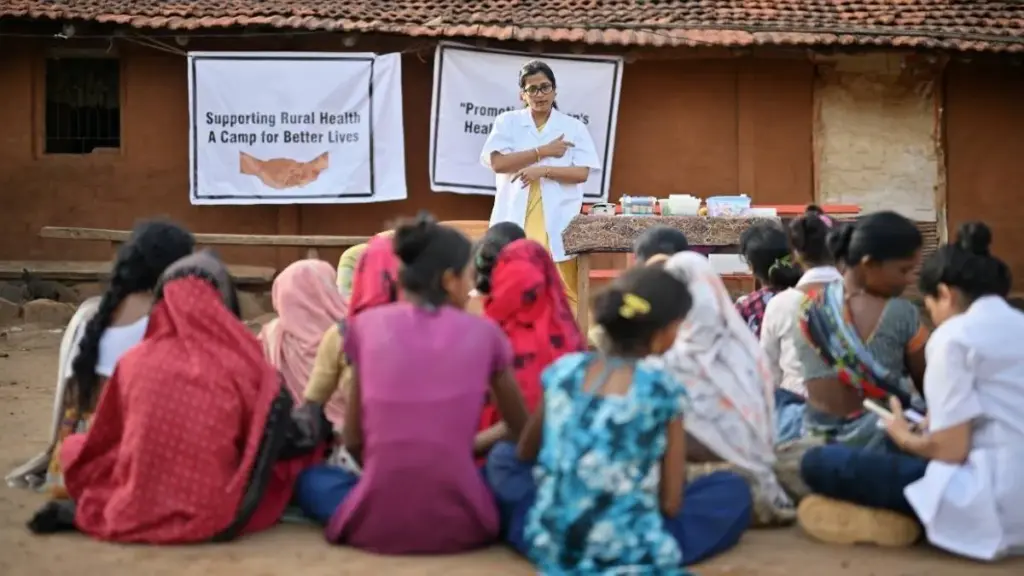
The afternoon may involve home visits, health awareness sessions, meetings with ASHA workers, updating online health portals, checking treatment compliance, or arranging teleconsultations with medical officers.
Because many positions are located in rural or underserved areas, CHOs must be comfortable communicating with local communities and handling limited resources.
Career Scope and Growth Opportunities
Community health is becoming an important part of India’s public healthcare system. CHOs can gain valuable experience in primary healthcare, government health schemes, disease surveillance, digital health services, maternal health, and non-communicable disease management.
With additional qualifications such as an MPH, M.Sc. Nursing, healthcare management course, or public health certification, experienced professionals may move into roles such as Public Health Manager, Block Program Manager, Nursing Supervisor, Health Consultant, District Program Coordinator, or Public Health Researcher.
Conclusion
A Community Health Officer career is suitable for nursing professionals who want meaningful government healthcare work, competitive monthly income, practical clinical experience, and opportunities to serve rural communities. However, applicants should carefully verify whether a vacancy is permanent or contractual and review its salary, service bond, posting conditions, eligibility rules, and performance targets before applying.