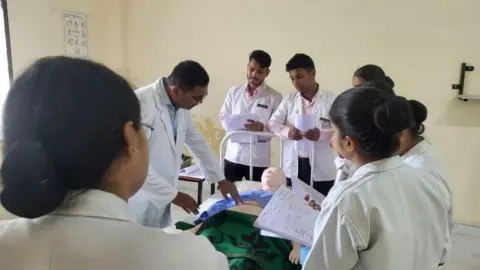
Many healthcare professionals begin their careers in private clinics to gain practical experience, but eventually aspire to secure a government health job for better stability, higher salaries, pension benefits, and career growth. Whether you are a staff nurse, pharmacist, lab technician, radiographer, ANM, GNM, or healthcare assistant, moving from the private sector to a government health department is entirely achievable with the right preparation.
In this article8 sections
- Understand Government Recruitment Requirements
- Highlight Your Private Healthcare Experience
- Upgrade Your Skills and Certifications
- Prepare for Government Health Exams
- Explore Multiple Government Healthcare Opportunities
- Prepare for Document Verification
- Career Benefits After Joining Government Healthcare
- Conclusion
Government healthcare organizations, including state health departments, AIIMS, district hospitals, ESIC hospitals, National Health Mission (NHM), and various medical institutions, regularly recruit experienced candidates. If you’re planning to switch from private practice to public healthcare, understanding the recruitment process and improving your qualifications can significantly increase your chances of success.
Understand Government Recruitment Requirements
Unlike private clinics, government health departments follow a structured recruitment process. Most vacancies are filled through written examinations, merit-based selection, skill tests, interviews, or document verification.
Before applying, carefully read the official notification to understand the educational qualification, age limit, experience requirements, reservation rules, and selection process. Candidates with experience in private healthcare often receive an advantage because they already possess practical clinical knowledge and patient care experience.
Highlight Your Private Healthcare Experience
Many candidates underestimate the value of their experience in private clinics. Daily responsibilities such as patient assessment, administering medications, maintaining medical records, assisting doctors, handling emergency cases, infection control, and communicating with patients are highly relevant in government hospitals.
When preparing your resume, clearly mention:
- Years of clinical experience
- Departments you worked in
- Medical equipment you handled
- Emergency care experience
- Electronic Medical Record (EMR) knowledge
- Patient counselling and documentation skills
A well-prepared resume can make your application stronger during government recruitment.
Find jobs that match you
2 quick questions · free · no sign-up
1 What is your qualification?
2 Which jobs do you want?
Upgrade Your Skills and Certifications
Government employers increasingly value candidates who continuously improve their professional knowledge. Completing recognized certification courses in community health, emergency care, infection prevention, healthcare management, medical coding, digital health, or hospital administration can strengthen your profile.
Professionals familiar with telemedicine, digital health records, Ayushman Bharat services, vaccination programs, and national public health initiatives often perform better during recruitment and interviews.
Prepare for Government Health Exams
Most permanent government healthcare jobs require candidates to clear competitive examinations. Depending on the department, questions may cover nursing fundamentals, pharmacy, laboratory science, public health, general knowledge, reasoning, computer awareness, and current healthcare schemes.
Create a study schedule that includes:
- Core healthcare subjects
- Previous years’ question papers
- Mock tests
- Government health policies
- National Health Mission programs
- Basic computer knowledge
Consistent preparation improves confidence and increases the likelihood of selection.
Explore Multiple Government Healthcare Opportunities
Many professionals focus only on one department and miss other excellent opportunities. Healthcare vacancies are announced regularly by state Public Service Commissions, NHM, AIIMS, ESIC, railway hospitals, defense medical services, municipal corporations, medical colleges, and district health authorities.
| Government Employer | Common Healthcare Posts |
|---|---|
| State Health Department | Staff Nurse, Pharmacist, Lab Technician |
| National Health Mission | Community Health Officer, ANM, GNM |
| AIIMS & Medical Colleges | Nursing Officer, Technician, Assistant |
| ESIC Hospitals | Staff Nurse, Pharmacist, Radiographer |
| District Hospitals | Healthcare Assistant, Technician, Nurse |
Applying for multiple eligible vacancies increases your chances of securing a government position.
Prepare for Document Verification
Government recruitment involves strict verification of educational qualifications and work experience. Keep your documents organized well in advance.
Essential documents generally include:
- Educational certificates
- Registration certificate (if applicable)
- Experience certificate from private clinic
- Identity proof
- Passport-size photographs
- Category certificate (if applicable)
Ensuring that your documents are complete can help avoid unnecessary delays during the selection process.
Career Benefits After Joining Government Healthcare
Transitioning to a government health department offers several long-term advantages beyond salary. Employees often receive job security, regular salary revisions, paid leave, health insurance benefits, retirement benefits as applicable, professional training, and opportunities for promotion.
Healthcare professionals also gain exposure to large public health programs, disease surveillance, maternal and child healthcare initiatives, immunization campaigns, and national healthcare missions, helping them build a rewarding and impactful career.
Conclusion
Moving from a private clinic to a government health department is an excellent career decision for healthcare professionals seeking long-term stability and professional growth. By strengthening your qualifications, showcasing your clinical experience, preparing for competitive recruitment exams, and applying strategically across multiple government organizations, you can successfully transition into a secure and respected public healthcare career. With dedication and continuous learning, your private healthcare experience can become the foundation for a successful future in government health services.