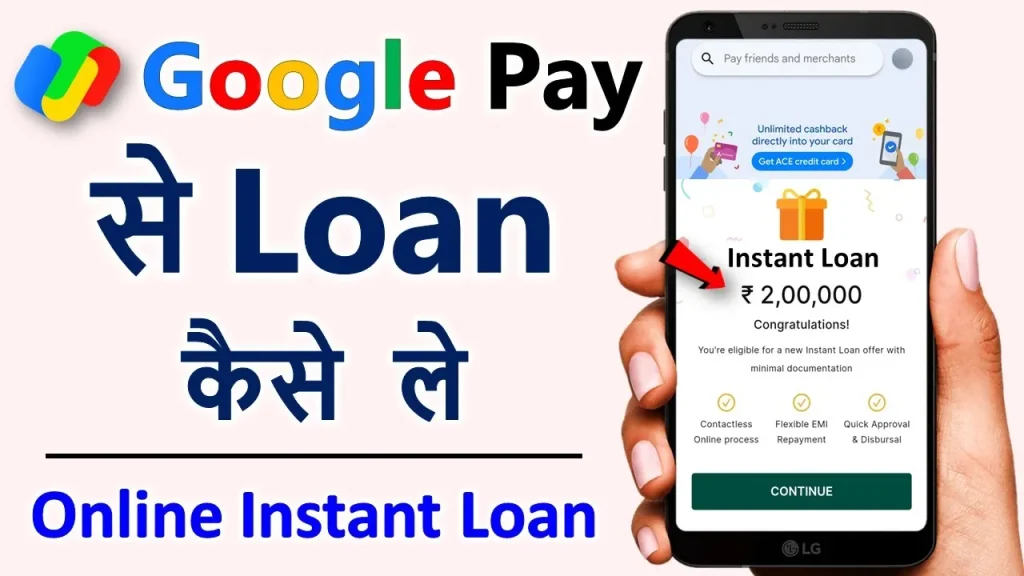
Looking for a Google Pay loan in India? Google Pay allows eligible users to discover and apply for personal-loan offers from participating lending partners directly through the Google Pay app.
In this article24 sections
- What Is a Google Pay Loan?
- Does Google Pay Give Personal Loans Directly?
- Who Can Get a Loan on Google Pay?
- Google Pay Personal Loan Eligibility
- How to Check Google Pay Loan Offers
- How to Apply for a Google Pay Personal Loan Online
- Google Pay Loan Interest Rate in 2026
- Google Pay Personal Loan EMI Example
- Google Pay Loan Documents Required
- Is CIBIL Score Required for a Google Pay Loan?
- Why Is My Google Pay Loan Offer Not Showing?
- Is Google Pay Loan Safe?
- Does Google Pay Charge a Loan Processing Fee?
- Google Pay Loan Partners
- Google Pay Loan vs Bank Personal Loan
- Google Pay Loan for Salaried Employees
- Google Pay Loan for Self-Employed Individuals
- What Is a Pre-Approved Google Pay Loan?
- Common Google Pay Loan Scams
- What to Do If Your Google Pay Loan Has a Problem
- Frequently Asked Questions
- Google Pay Loan: Pros and Cons
- Final Word
- Peoples are searching on Google:
One important point is often misunderstood: Google Pay itself does not provide or approve the personal loan. According to Google Pay’s official help information, the platform connects eligible users with lenders, while the lender evaluates the application and decides whether to approve it. Google Help
This guide explains Google Pay personal loan eligibility, how to apply, interest rates, loan amounts, CIBIL score requirements, KYC, EMI, fees, safety precautions and common loan scams in India in 2026.
What Is a Google Pay Loan?
A Google Pay loan is generally a personal-loan offer made by a participating financial institution and presented through the Google Pay app.
Google Pay acts as a platform that connects eligible customers with lending partners. The actual financial institution evaluates the application, determines eligibility and disburses the loan if approved. Google Help+1
This means:
Google Pay ≠ the lender.
Instead, the basic process is:
Google Pay → Loan offer → Partner lender → Eligibility/KYC assessment → Approval → Loan disbursal
Google’s developer documentation says eligible or pre-qualified users can see loan offers and then provide the information required by the partner financial institution for evaluation. Google for Developers
Does Google Pay Give Personal Loans Directly?
No.
Google Pay’s official support page specifically states that Google Pay connects users with lenders but does not give loans or review applications. The lender decides whether to accept or reject the application. Google Help
Therefore, when searching for:
- Google Pay loan
- Google Pay personal loan
- GPay loan
- Loan on Google Pay
- Google Pay instant loan
- Google Pay cash loan
- Personal loan through Google Pay
you should understand that the actual credit facility comes from a participating lender.
Who Can Get a Loan on Google Pay?
Loan offers are not necessarily displayed to every Google Pay user.
Google states that only eligible users can find personal-loan offers in the Google Pay app. Eligibility and availability can depend on factors considered by the lending partner and, according to Google, information and activity associated with Google Pay and other Google services, together with the lender’s own rules. Google Help
Potential factors may include:
- Credit history
- Income
- Existing financial obligations
- KYC information
- Banking information
- Customer profile
- Lender-specific eligibility criteria
- Information required by the participating lender
Having a Google Pay account therefore does not guarantee that a loan offer will appear.
Google Pay Personal Loan Eligibility
There is no single public eligibility formula applicable to every Google Pay loan because the lending partner makes the credit decision.
Common personal-loan eligibility factors can include:
Age
The lender may specify minimum and maximum age limits.
Income
The lender may evaluate salary, business income or other eligible income sources.
Employment or business profile
Salaried employees, self-employed individuals and professionals may have different documentation and eligibility requirements.
Credit history
Your credit profile can influence whether you qualify and the terms offered by a lender.
Existing EMIs
Existing loans and credit-card obligations can affect repayment capacity.
KYC
The lender may require identity and financial information before approving the loan.
Banking information
Depending on the lender and application process, bank-account information or statements may be required.
Important: Meeting general personal-loan criteria does not guarantee a Google Pay loan offer.
How to Check Google Pay Loan Offers
If a loan offer is available for your account, Google says you can generally find it in the “Manage your money” or “Money” section of the Google Pay app. You may also receive a loan-offer notification. Google Help
A typical process is:
- Open the Google Pay app.
- Go to the Money or Manage your money section.
- Look for Loans.
- Review any available loan offer.
- Identify the actual lending partner.
- Review the loan amount, interest rate, fees and repayment terms.
- Complete the lender’s application and KYC requirements.
- Accept the final terms only after reviewing the documentation.
- Set up the required EMI repayment method.
- Wait for the lender’s final approval and disbursal.
Google’s developer documentation describes a digital process in which eligible customers select the loan amount and tenure, complete paperless KYC, set up EMI repayment instructions and accept the final terms. Google for Developers
How to Apply for a Google Pay Personal Loan Online
Step 1: Open Google Pay
Use the official Google Pay application installed from a trusted app store.
Step 2: Check the Loans section
Go to the Money/Manage your money section and look for available loan offers.
Step 3: Review the lender
Before accepting an offer, identify the financial institution actually providing the loan.
This is particularly important because Google Pay is acting as a platform rather than the lender.
Step 4: Check the offer
Carefully examine:
- Loan amount
- Interest rate
- APR
- EMI
- Tenure
- Processing fee
- Applicable taxes
- Late-payment charges
- Prepayment/foreclosure terms
- Other applicable charges
Step 5: Complete KYC
The lending partner may request identity, financial and other information required to evaluate your application.
Step 6: Read the loan documents
Do not accept the loan simply because the application is digital or the offer appears instant.
Read the Key Fact Statement (KFS) and loan agreement where applicable.
Step 7: Accept the final terms
Google’s platform documentation states that eligible borrowers may need to complete KYC, establish EMI payment instructions and accept the final terms using an OTP/electronic process. Google for Developers
Step 8: Loan disbursal
If the lender approves the application and all required steps are completed, the lending institution disburses the loan according to its process.
Find jobs that match you
2 quick questions · free · no sign-up
1 What is your qualification?
2 Which jobs do you want?
Google Pay Loan Interest Rate in 2026
There is no single Google Pay personal-loan interest rate.
The interest rate is determined by the actual lender and may depend on factors such as:
- Credit history
- Income
- Loan amount
- Tenure
- Existing debt
- Customer profile
- Lender’s risk assessment
- Other underwriting factors
Therefore, an advertisement claiming that “Google Pay loans are available at X% for everyone” should be treated cautiously unless the exact lender and current offer are clearly identified.
Interest Rate vs APR
When comparing personal loans, don’t look only at the advertised interest rate.
The Annual Percentage Rate (APR) is particularly important because it reflects the overall annualised cost of credit under the applicable regulatory framework.
RBI’s digital-lending framework requires disclosure of the all-inclusive cost of the loan through APR and includes requirements relating to the Key Fact Statement. Reserve Bank of India
Google Pay Personal Loan EMI Example
Consider an illustrative loan of:
- Loan amount: ₹2,00,000
- Interest rate: 12% per year
- Tenure: 24 months
The approximate EMI would be ₹9,415 per month.
Approximate total repayment:
₹9,415 × 24 = ₹2,25,960
Approximate interest:
₹2,25,960 − ₹2,00,000 = ₹25,960
This is only an illustration. Your actual EMI can differ depending on the lender, interest rate, fees, taxes, repayment structure and final loan terms.
Google Pay Loan Documents Required
The actual requirements depend on the lender.
Potential documents or information can include:
- PAN
- Aadhaar or another accepted KYC document
- Mobile number
- Bank-account details
- Income information
- Salary slips
- Bank statements
- Employment details
- Business or professional information
- Other documents requested by the lender
A digital application may reduce paperwork, but digital processing does not mean that financial verification is unnecessary.
Is CIBIL Score Required for a Google Pay Loan?
There is no universal CIBIL-score threshold for every loan offer available through Google Pay.
The participating lender decides how it evaluates creditworthiness.
Your credit profile may influence:
- Eligibility
- Loan amount
- Interest rate
- Tenure
- Approval decision
A good credit history can be useful when applying for credit, but no particular CIBIL score should be described as a guaranteed Google Pay loan-approval score.
Why Is My Google Pay Loan Offer Not Showing?
If you cannot find a loan offer, it does not necessarily mean that there is a technical problem.
Google says loan offers are provided directly by lenders based on their discretion and can also be influenced by transactions on Google Pay, information associated with activity across Google services, lender eligibility rules and personalization settings. Google Help
Possible reasons include:
- You currently aren’t eligible for an available offer.
- A participating lender has not made an offer.
- Your profile does not meet a lender’s criteria.
- The lender has changed its eligibility requirements.
- Personalization settings affect which offers are displayed.
The lender, rather than Google Pay, makes the final loan approval decision.
Is Google Pay Loan Safe?
Using the official Google Pay app to access a loan offer can be different from applying through an unknown loan website or unofficial mobile application.
However, borrowers should still verify the actual lending institution and complete cost of credit before accepting an offer.
RBI’s digital-lending framework includes requirements around APR disclosure, consent-based data collection, privacy policies and handling of borrower information. Reserve Bank of India
Google Pay Loan Safety Checklist
Before accepting a loan:
- Verify the name of the actual lender.
- Use the official Google Pay application.
- Read the Key Fact Statement.
- Compare APR rather than only the headline interest rate.
- Check processing fees and applicable taxes.
- Understand the EMI and total repayment.
- Read prepayment and late-payment conditions.
- Never share your UPI PIN.
- Never disclose banking passwords or confidential OTPs to callers.
- Avoid installing loan APK files from unknown websites.
- Save your sanction letter and loan agreement.
- Keep records of all payments.
Does Google Pay Charge a Loan Processing Fee?
The answer depends on the actual lending partner and loan product.
A borrower should not assume that every Google Pay loan has the same processing fee.
Check the lender’s:
- Processing fee
- Documentation fee, if applicable
- GST/taxes
- Late-payment charges
- Foreclosure/prepayment charges
- Other applicable fees
The KFS and loan agreement should be reviewed before accepting the loan.
Google Pay Loan Partners
Google Pay’s lending ecosystem can involve participating financial institutions.
Google’s current lending-related help documentation lists grievance information for lending partners including DMI Finance, Bajaj Finance, Axis Bank and IDFC FIRST Bank, among others. The exact lenders and products available to an individual user can change. Google Help
Because lending partnerships can change, avoid publishing a static list of “Google Pay loan partners” without checking Google’s current documentation or the lender shown in the user’s actual offer.
Google Pay Loan vs Bank Personal Loan
| Feature | Google Pay Loan Offer | Direct Bank Personal Loan |
|---|---|---|
| Application | Digital through Google Pay | Bank website/app/branch |
| Actual lender | Participating financial institution | Bank |
| KYC | Digital options may be available | Digital or physical |
| Credit assessment | Lender | Bank |
| Interest rate | Depends on lender | Depends on bank |
| Loan approval | Lender | Bank |
| EMI | Paid according to lender terms | Paid according to bank terms |
| Offer availability | Only eligible users may see offers | Depends on bank eligibility |
| Documentation | Depends on lender | Depends on bank |
The biggest distinction is that a Google Pay loan offer is a distribution/application channel, while the participating financial institution remains responsible for the actual lending decision.
Google Pay Loan for Salaried Employees
Salaried applicants may have to provide information such as:
- Salary
- Employer
- Employment duration
- Bank details
- PAN/KYC
- Existing liabilities
- Credit information
Some users may receive digital or pre-qualified offers, but the lender can still perform additional checks before final approval.
Google Pay Loan for Self-Employed Individuals
Self-employed applicants may be asked for additional financial information, such as:
- Business income
- Bank statements
- ITR
- Business details
- GST information, where applicable
- PAN/KYC
- Existing credit obligations
Requirements depend on the lender.
What Is a Pre-Approved Google Pay Loan?
A pre-qualified or pre-approved-looking offer should not automatically be interpreted as unconditional disbursal.
Google’s developer documentation describes a process in which pre-qualified users receive an offer, after which the partner financial institution evaluates the application. Eligible users then complete steps such as selecting the amount and tenure, KYC, EMI setup and acceptance of final terms. Google for Developers
Therefore, always check whether an offer is:
- An indicative offer
- Pre-qualified
- Pre-approved
- Fully approved
- Ready for disbursal
These terms can have different meanings depending on the lender.
Common Google Pay Loan Scams
Search terms such as “Google Pay loan without CIBIL,” “Google Pay ₹1 lakh instant loan,” “GPay loan without documents” and “Google Pay guaranteed loan” can attract fraudulent websites and individuals impersonating financial companies.
Be suspicious if someone:
- Guarantees loan approval.
- Asks for your UPI PIN.
- Requests your banking password.
- Demands an unexplained upfront payment.
- Asks you to share an OTP with a caller.
- Sends an APK through WhatsApp or Telegram.
- Threatens you after receiving your documents.
- Refuses to identify the actual lender.
- Claims Google Pay itself guarantees a loan.
- Requests unnecessary access to contacts or personal files.
Never Share Your UPI PIN
A UPI PIN is used to authorize payments. It should never be shared with a supposed loan agent to “receive” a loan.
Likewise, do not disclose confidential banking credentials or authentication codes to unknown callers.
What to Do If Your Google Pay Loan Has a Problem
For loan-related complaints, Google Pay directs customers to the relevant lending partner’s grievance-redressal process. Google also provides its own support channels for issues involving Google Pay. Google Help
Google’s current help documentation lists a Google Pay customer-care number of 1-800-419-0157 and an in-app support route through Settings → Help and feedback. Google Help
For a specific loan dispute, identify the actual lender first because the lender is responsible for the loan account and its servicing.
Frequently Asked Questions
Does Google Pay provide personal loans?
No. Google Pay connects eligible users with lending partners; the participating lender evaluates the application and provides the loan if approved. Google Help
How can I get a loan on Google Pay?
Open Google Pay, check the Money/Manage your money section for an available loan offer, review the lender and terms, and complete the lender’s application and KYC process if eligible. Google Help
Is a Google Pay loan available to everyone?
No. Google states that only eligible users can find loan offers, and lenders apply their own eligibility rules. Google Help
What is the Google Pay loan interest rate?
There is no single Google Pay loan interest rate. The rate depends on the actual lending institution and the applicant’s profile.
Can I get an instant loan on Google Pay?
Some eligible users may receive digitally processed loan offers, but the actual lender must evaluate and approve the application.
Does Google Pay loan require CIBIL?
Credit assessment is determined by the lending institution. There is no universal public CIBIL-score threshold for every Google Pay loan offer.
Can I get a Google Pay loan without documents?
Some digital loan processes may reduce paperwork, but the lender can still require KYC, income and other information. Do not assume that Aadhaar or a Google Pay account alone is sufficient.
Why don’t I see the Loans option in Google Pay?
Loan offers are available only to eligible users and depend on lender discretion and applicable eligibility criteria. Google Help
Is Google Pay a bank?
Google Pay is a payments platform. For personal loans offered through the platform, the actual lender is a participating financial institution.
What should I compare before accepting a Google Pay loan?
Compare the interest rate, APR, EMI, processing fee, total repayment, tenure, late charges and prepayment conditions. Read the KFS and loan agreement before accepting.
Google Pay Loan: Pros and Cons
Potential Benefits
- Digital application process
- Convenient access through Google Pay
- Potentially paperless KYC
- Loan offers from participating financial institutions
- Digital EMI setup
- No need to visit a branch for some applications
Things to Consider
- Loan offers aren’t available to everyone.
- Google Pay does not make the final credit decision.
- Interest rates vary by lender and applicant.
- Additional fees may apply.
- A pre-qualified offer does not necessarily mean unconditional disbursal.
- Borrowers must still evaluate affordability and total repayment cost.
Final Word
A Google Pay loan in India in 2026 is best understood as a personal-loan application facilitated through Google Pay rather than a loan directly issued by Google Pay.
If an eligible offer appears in your app, identify the actual lender first. Then compare the interest rate, APR, EMI, processing fee, total repayment and other charges before accepting.
Most importantly, never assume that a loan is guaranteed simply because an offer appears in an app. The participating lender conducts the relevant assessment and makes the final lending decision. Google Help+1
For digital lending, RBI’s framework also emphasizes transparent cost disclosure, consent-based data practices and borrower protections, making the Key Fact Statement and loan agreement essential documents to review before accepting credit. Reserve Bank of India
Peoples are searching on Google:
- Google Pay loan
- Google Pay personal loan
- Google Pay loan 2026
- Google Pay personal loan 2026
- loan on Google Pay
- GPay loan
- GPay personal loan
- Google Pay loan apply online
- personal loan online
- instant personal loan
- personal loan interest rate
- personal loan eligibility
- personal loan apply online
- personal loan without collateral
- personal loan for salaried employees
- personal loan CIBIL score
- personal loan EMI calculator
- instant loan online
- online loan application
- loan without documents
- best personal loan interest rate
- personal loan processing fee
- personal loan eligibility calculator
- low interest personal loan
- digital personal loan
- online personal loan India
Content-maintenance note: Loan rates, lending partners, eligibility rules and app interfaces can change. For a finance/YMYL page, update lender names, rates, fees and regulatory references whenever the underlying official sources change.
For publication, I’d recommend adding a loan EMI calculator, comparison table, FAQ schema, author credentials, last-updated date, and prominent links to official lender/RBI information. Those additions can make the page substantially stronger for both search intent and user trust.